Description
Benefits of Erlenmeyer Flasks
Designed for More Demanding Workflows
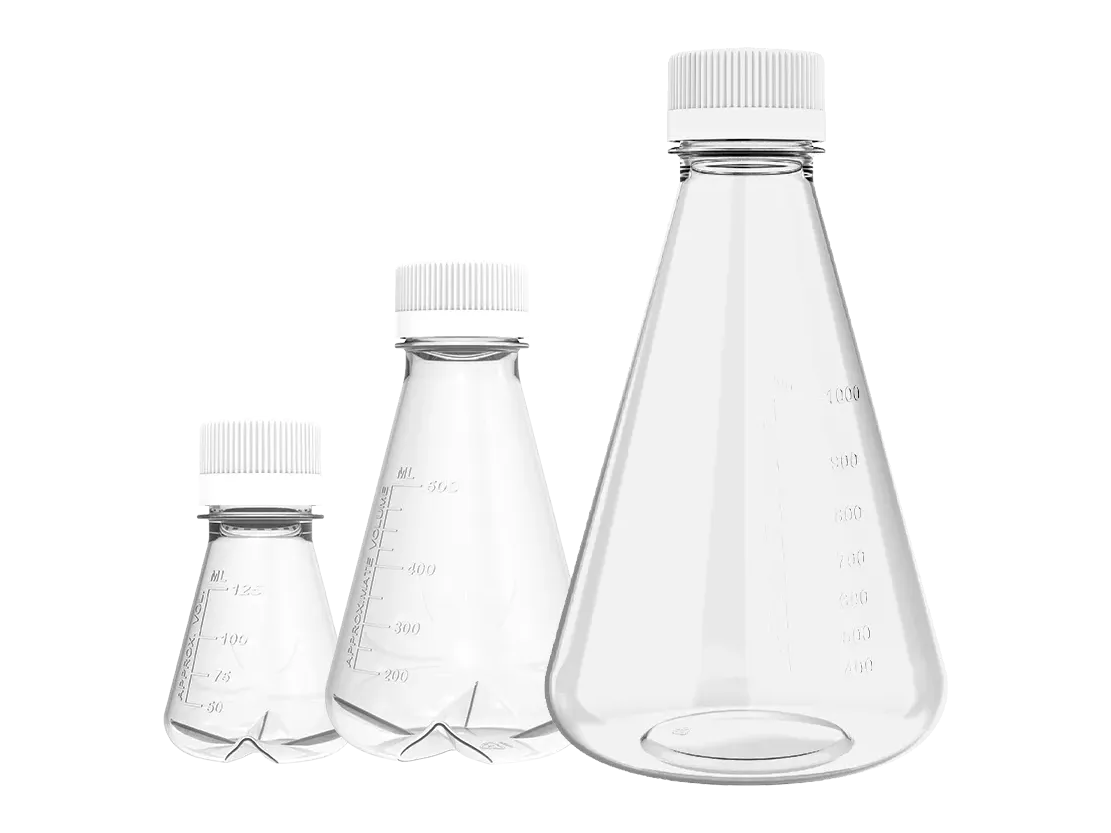
When laboratory workflows involve different volumes, materials, and handling conditions, flexibility matters. These flasks support applications across cell culture suspension, media preparation, mixing, and storage without requiring a separate format for every stage.
Confidence Across Handling Conditions
Material selection can directly influence how a container performs during processing and storage. The PETG and PC options provide different temperature capabilities, while the PC variant supports autoclaving for sterilization.
Ready for Sensitive Applications
Manufactured in a Class 100K cleanroom and made from USP Class VI materials, the flasks are designed with sample integrity in mind. RNase/DNase-free, noncytotoxic, and nonpyrogenic specifications further support sensitive bioprocessing workflows.
Sterility When It Matters
Individually packaged, gamma-irradiated options provide sterilised containers for immediate use. The vented cap configuration also enables continuous gas exchange through a hydrophobic 0.2 μm PTFE filter while maintaining sterility and preventing leakage.
How These AHN myBottle Erlenmeyer Flasks Stand Apart
The value lies in how the different specifications work together. From PETG and PC material choices to vented and non-vented HDPE caps, the configuration can suit different laboratory requirements.
The design also brings together properties that matter during everyday handling. Crystal-clear construction supports visibility, while leakproof and shatterproof construction helps protect samples and improve handling safety.
For workflows involving temperature variation, the material options provide defined operating ranges. PETG supports -40°C to 70°C, while PC supports the higher range specified for demanding conditions and also offers an autoclavable option.
Applications Across Bioprocessing Industries
Cell Culture and Bioprocessing
For suspension cell culture workflows, the flasks provide formats designed for laboratory and industrial bioprocessing applications. Vented cap options support continuous gas exchange while maintaining sterility.
Media Preparation
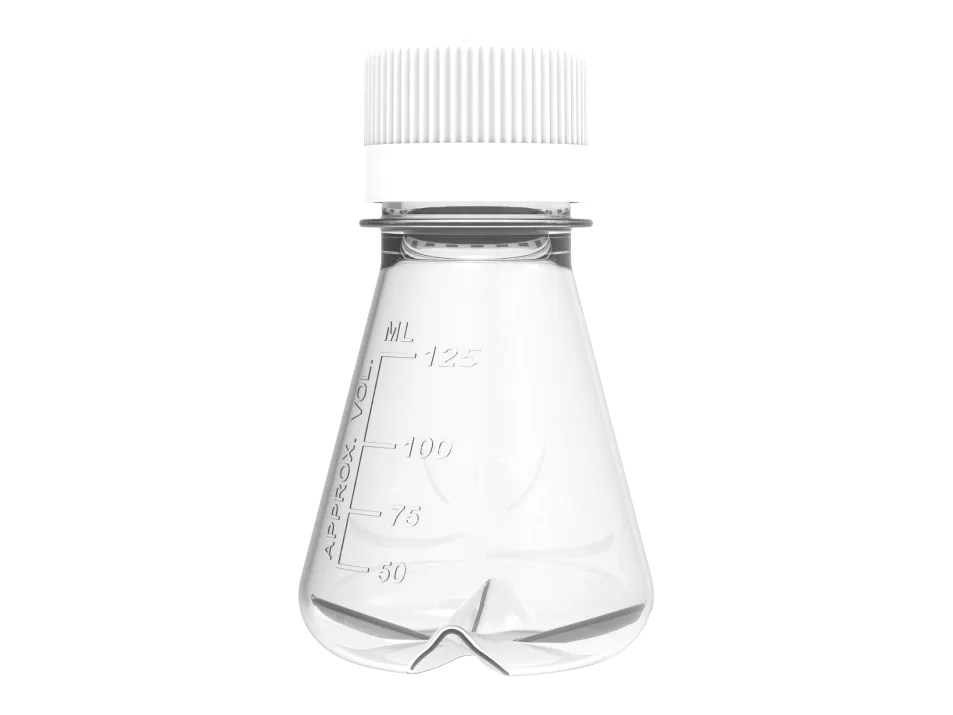
Graduated visibility and multiple volume options make the flasks suitable for media preparation workflows where clear volume identification is important.
Laboratory Mixing
The available configurations support mixing applications across different working volumes, with material choices suited to different processing requirements.
Sample Storage
Leakproof, shatterproof construction supports sample handling and storage, while temperature-resistant material options provide flexibility for different storage conditions.
FAQs
Which material should I choose for temperature-sensitive workflows?
The choice depends on the required temperature range. PETG supports -40°C to 70°C, while PC is designed for a wider temperature range and is autoclavable.
When is a vented cap useful?
A vented cap supports continuous gas exchange through a hydrophobic 0.2 μm PTFE filter. It is also designed to maintain sterility and prevent leakage.
Are these flasks suitable for sensitive bioprocessing applications?
Yes. They are manufactured in a Class 100K cleanroom and use USP Class VI materials. They are also RNase/DNase-free, noncytotoxic, and nonpyrogenic.
Are sterilised options available?
Yes. Selected configurations are sterilised by gamma irradiation according to ISO 11137-2, with a SAL of 10⁻⁶, and are individually packaged in EZ-Tear bags for immediate use.