Features
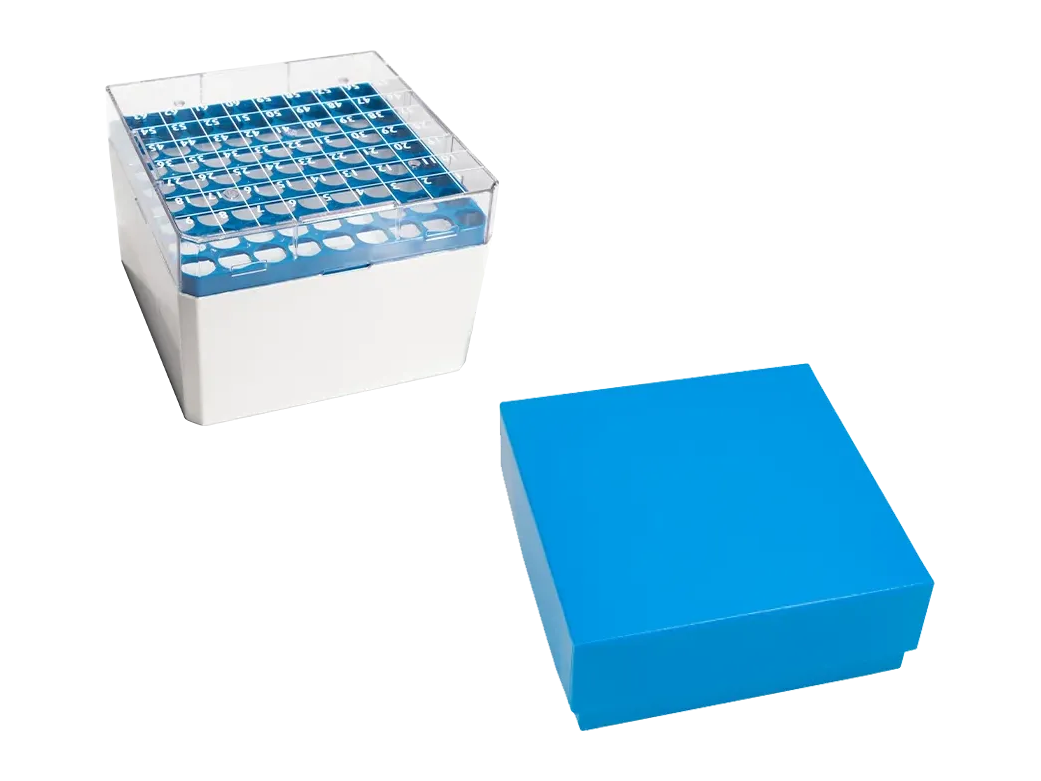
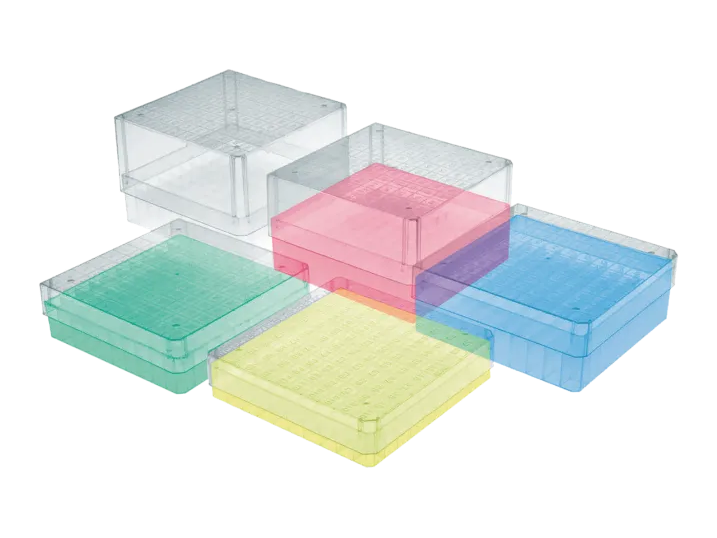
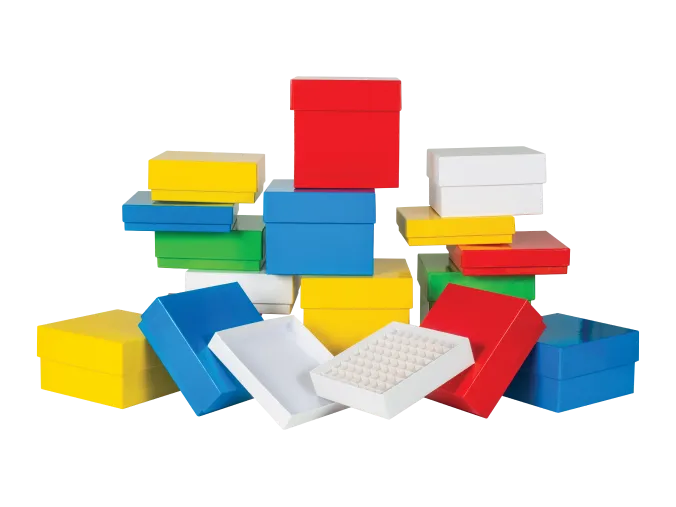
1. Superior Storage Options: AHN Cryoboxes are available in durable plastic and moisture-resistant cardboard variants, offering versatile storage solutions tailored to different laboratory needs. Both options are designed to protect cryovials effectively, ensuring sample integrity during storage and handling.
2. Exceptional Durability: Cardboard Cryoboxes feature a hydrophobic coating that repels moisture, protects against spills, and withstands freeze-thaw cycles. They also resist mild solvents and alcohols for extended use. Plastic Cryoboxes are made from high-quality polypropylene, capable of enduring extreme temperatures from -150°C to +121°C without cracking or chipping.
3. Eco-Friendly and Sustainable: Cardboard cryoboxes are manufactured using environmentally sustainable practices and are recyclable, making them a green alternative for eco-conscious laboratories.
4. Flexible Grid Configurations: Both box types offer customizable grids, with 9×9 and 10×10 configurations, accommodating cryovials from 0.5 mL to 5.0 mL. The flexibility ensures compatibility with a variety of cryovial sizes and brands.
5. Organized and User-Friendly: Plastic cryoboxes feature a molded alphanumeric coding system for easy sample organization and retrieval, while colorful cardboard cryoboxes provide visual cues for efficient sample sorting and identification.
6. Multiple Size Variants: Choose from a range of box footprints and heights to match your lab’s storage requirements. Cardboard cryoboxes come in various sizes for diverse tube lengths, while plastic cryoboxes are stackable and fit most standard freezer racks.
7. Reliable Performance Across Applications: Whether you’re working in cryopreservation, molecular biology, or general lab storage, AHN Cryoboxes offer practical, reliable solutions to meet the demands of modern research.
Description
Benefits of AHN maxxLine® Cryo Box
Structured Storage for Critical Samples
Cryo storage requires more than simply placing vials inside a box. AHN maxxLine® Cryo Box provide a structured way to arrange, identify, and handle cryovials across laboratory workflows. Multiple grid configurations and box dimensions allow laboratories to select a format suited to their sample storage requirements.
Protection Through Demanding Storage Conditions
Laboratory storage can involve moisture exposure, repeated temperature changes, and handling with solvents or alcohols. The hydrophobic coating on cardboard variants helps maintain box integrity through these conditions, while polypropylene plastic variants provide resilience across a broad temperature range. This makes both formats practical for demanding cryopreservation environments.
Easier Sample Identification
Sample organization becomes increasingly important as storage volumes grow. Molded alphanumeric coding on plastic cryoboxes supports consistent vial positioning and identification. Cardboard variants also use color options to provide an additional visual reference when sorting and handling stored samples.
How AHN maxxLine® Cryo Box Stand Out
Every lab has its own way of doing things — and its own reasons for it. That’s why AHN maxxLine® Cryo Box come in two distinct materials, so you can pick what actually fits your workflow instead of working around a single option.
Need something moisture-resistant and easy to recycle? The cardboard boxes have you covered. Looking for something that can be reused over and over and holds up to repeated freeze-thaw cycles? The plastic versions are built for exactly that kind of long-term durability.
Storage flexibility doesn’t stop at material choice, either. You’ll find a range of footprints, heights, and grid layouts to choose from, so you’re not stuck reshaping your sample organization around one box design. The plastic boxes are especially versatile — they hold cryovials anywhere from 0.5 mL to 5.0 mL, and they work just as well with AHN vials as with most other common brands on the market.
Put it all together — material options, flexible formats, and dependable organization — and you’ve got a cryostorage range that adapts to whatever your lab needs, rather than the other way around.
Research Laboratories
Suitable for organized cryovial storage in research environments where samples need consistent positioning and identification.
Molecular Biology
The available grid formats and cryovial compatibility support structured storage of samples used within molecular biology workflows.
Cryopreservation Facilities
The range provides storage formats designed for cryovials and demanding low-temperature environments, with cardboard and polypropylene options available according to laboratory requirements.
General Laboratory Storage
Different dimensions, configurations, and material options allow the boxes to be incorporated into varied laboratory storage systems.
FAQs
Can AHN cryoboxes be used with cryovials from different brands?
Yes. Plastic cryoboxes are designed to accommodate AHN cryovials as well as other common cryovial brands, supporting integration into existing laboratory workflows.
What makes the cardboard boxes suitable for repeated freeze-thaw exposure?
Their hydrophobic coating helps repel moisture and protects the cardboard against spills and freeze-thaw cycles, while also providing resistance to mild organic solvents and alcohols.
How does the 9×9 plastic grid improve storage efficiency?
The 9×9 configuration is designed as a space-saving format and can hold 23% more samples without increasing the box footprint.
Are the plastic cryoboxes suitable for autoclaving?
Yes. The polypropylene construction supports durability and reusability, including after autoclaving.
How can laboratories choose between cardboard and plastic cryoboxes?
The choice depends on the storage requirement. Cardboard offers a recyclable option with moisture resistance, while plastic provides greater durability, reusability, and thermal resilience.